
Block Pallets: Choosing the Right Solution for Your Business
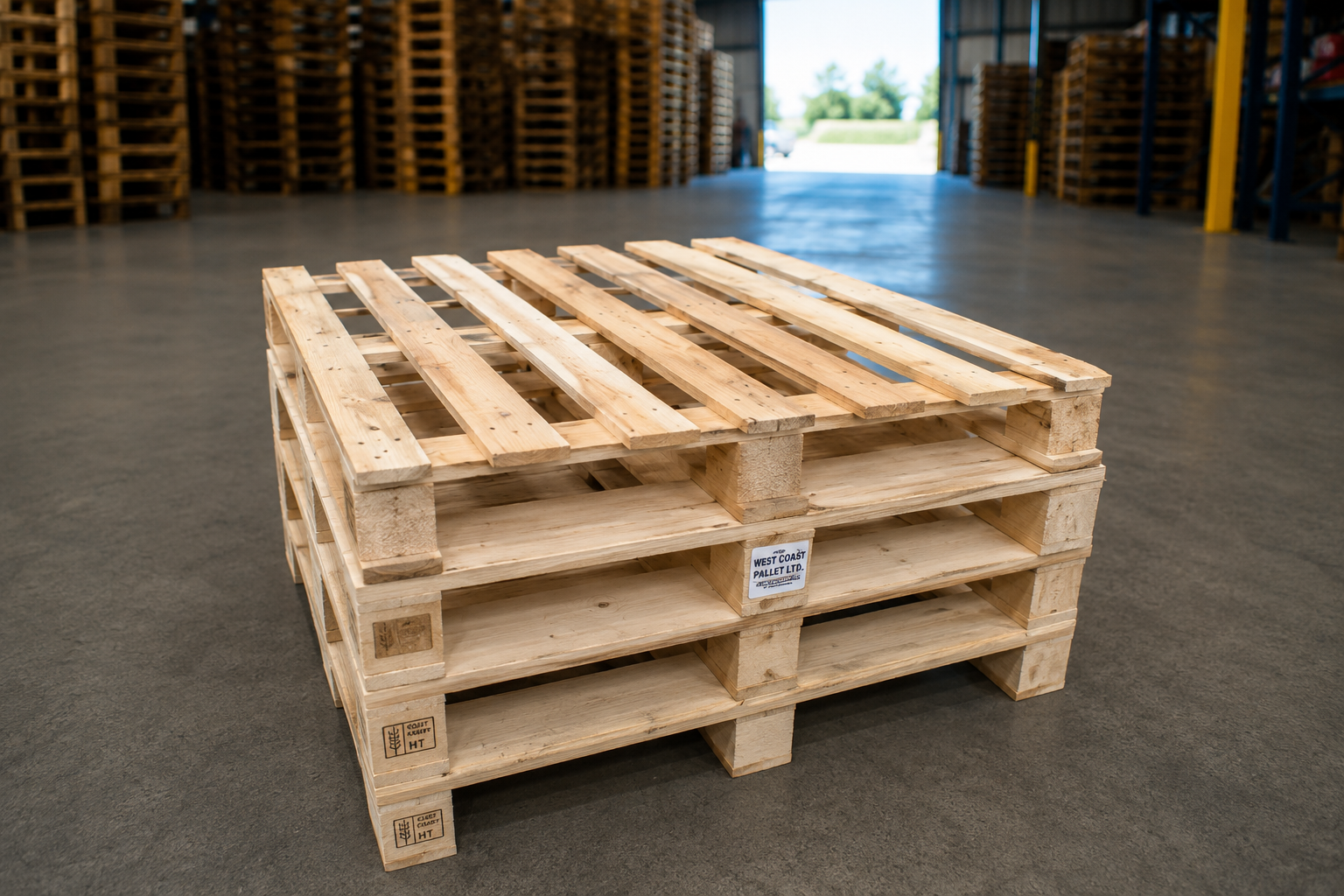
Block pallets are a popular choice for businesses that need strength, stability, and efficient four-way forklift access. From busy warehouses and manufacturing facilities to export shipments, they’re designed to handle demanding operations with confidence.
In this guide, you’ll learn how block pallets work, where they’re used, how they compare with stringer pallets, and what to consider before choosing the right option for your business.
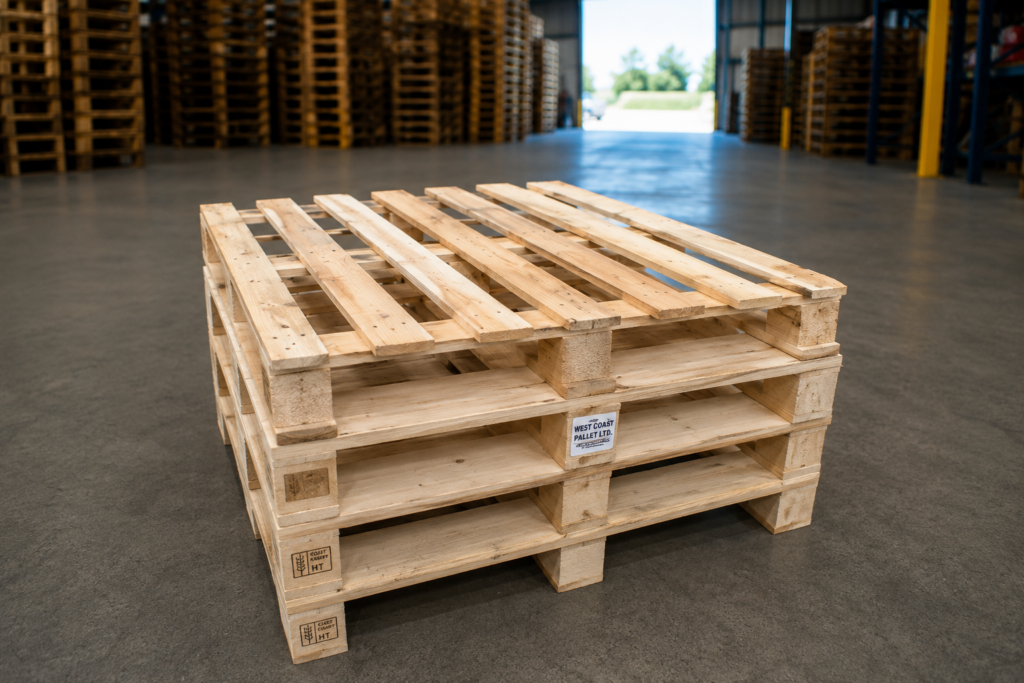
What Is a Block Pallet?
A block pallet is a wooden pallet built with solid support blocks positioned between the top and bottom deck boards. Unlike traditional stringer pallets, its design allows forklifts and pallet jacks to enter from all four sides, making loading, unloading, and moving goods faster and more efficient.
Wooden block pallets are commonly used in warehouses, manufacturing facilities, distribution centres, and export operations where dependable handling and load stability are essential. Their strong construction makes them suitable for repeated use, heavier loads, and operations that require efficient material movement throughout the supply chain.
Why Businesses Choose Block Pallets
Block pallets are designed for businesses that need dependable performance in fast-moving warehouse and shipping environments. Their four-way entry design makes handling easier, while their strong construction helps support demanding loads across repeated use.
Here are some of the main reasons businesses choose block pallets:
Better Material Handling
Unlike many traditional pallet designs, block pallets can be accessed from all four sides with forklifts and pallet jacks. This allows operators to load, unload, and reposition pallets more efficiently, helping improve productivity in warehouses and distribution centres.
Reliable Support for Heavy Loads
The support blocks distribute weight more evenly across the pallet, providing greater stability during storage, transportation, and handling. This makes block pallets a dependable choice for businesses moving heavier products or stacked loads.
Suitable for Warehouse Racking Systems
Many warehouse operations prefer block pallets because their design provides improved support when used with compatible racking systems. Choosing the correct pallet specification for your storage setup can also help reduce the risk of pallet damage during daily operations.
Built for Repeated Use
High-quality wooden block pallets are designed to withstand regular handling, making them a practical option for businesses that reuse pallets throughout their supply chain. Their durable construction can also reduce replacement costs over time when properly maintained.
Ideal for Export and Distribution
Many exporters and logistics companies choose block pallets because they work efficiently with modern handling equipment and are commonly available in heat-treated options for international shipping. When manufactured to export requirements, they provide a reliable solution for businesses shipping products beyond Canada.
Block Pallets vs. Stringer Pallets: What’s the Difference?
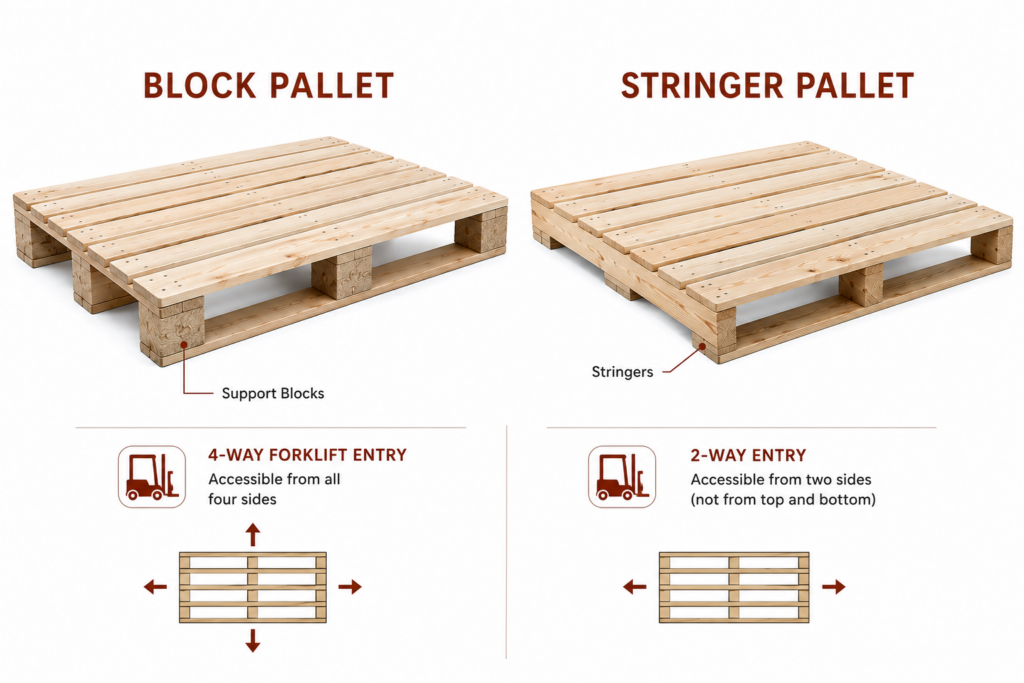
Although both block pallets and stringer pallets are widely used for transporting and storing goods, they’re built differently and are designed for different operational needs. Choosing the right option depends on your handling equipment, load requirements, storage system, and budget.
| Feature | Block Pallets | Stringer Pallets |
|---|---|---|
| Forklift Access | Four-way entry for easier handling | Two-way or partial four-way entry |
| Construction | Built with solid support blocks | Built with longitudinal stringers |
| Load Distribution | More even weight distribution | Suitable for standard loads |
| Warehouse Efficiency | Ideal for busy warehouses and distribution centres | Well suited for general storage and transport |
| Racking Performance | Better support in many racking applications* | Depends on pallet design and load requirements |
| Typical Cost | Higher initial investment | Generally more economical |
*Always choose a pallet specification that matches your racking system and load capacity requirements.
When Are Block Pallets the Better Choice?
Block pallets are often the preferred option for businesses that:
- Handle products with forklifts throughout the day.
- Store pallets in warehouse racking systems.
- Move heavy or high-volume loads.
- Export products using heat-treated wooden pallets.
- Want a durable pallet that performs well through repeated handling.
When Are Stringer Pallets a Better Option?
Stringer pallets remain a practical choice for many businesses that:
- Handle lighter or standard-weight products.
- Need a cost-effective pallet solution.
- Have simpler storage and transportation requirements.
- Don’t require full four-way forklift accessibility.
Neither design is universally better. The right pallet depends on how your business stores, handles, and ships its products. Selecting the correct pallet for your operation can improve handling efficiency, reduce product damage, and lower long-term operating costs.
Common Industries That Use Block Pallets
Block pallets are used across many industries because they provide dependable support, efficient handling, and compatibility with modern material-handling equipment. While their applications vary, they’re especially valuable in operations where products are moved, stored, and shipped on a daily basis.
Warehousing & Distribution
Distribution centres and warehouses rely on block pallets to keep products moving efficiently. Their four-way entry design allows forklifts and pallet jacks to approach from multiple directions, helping speed up loading, unloading, and inventory movement in busy facilities.
Manufacturing
Manufacturers often use block pallets to transport raw materials, work-in-progress items, and finished products throughout production. Their stable construction helps support repeated handling while reducing the risk of load movement during transportation inside the facility.
Retail & Wholesale Distribution
Businesses supplying retail stores and wholesale customers frequently choose block pallets because they’re well suited for storing, transporting, and organizing large volumes of goods. Their consistent design also helps improve handling throughout the supply chain.
Food & Beverage Industry
Food and beverage companies commonly use block pallets for packaged products that require reliable handling and efficient warehouse storage. When export shipments are involved, heat-treated wooden block pallets can also help meet international shipping requirements.
Export & International Shipping
Many exporters prefer block pallets because they’re available in heat-treated options that comply with international wood packaging regulations. Combined with their strong construction and four-way forklift access, they offer a practical solution for businesses shipping products overseas.
E-commerce & Third-Party Logistics (3PL)
Fast-moving fulfilment centres and third-party logistics providers benefit from block pallets because they support efficient product movement, organized storage, and frequent handling throughout daily warehouse operations.
How to Choose the Right Block Pallet for Your Business
Not every block pallet is built for the same application. Choosing the right pallet depends on how it will be used, how much weight it needs to support, and the conditions it will operate in. Considering these factors before you buy can help improve efficiency, reduce damage, and extend the pallet’s service life.
Consider Your Load Requirements
Start by looking at the weight and type of products you’ll be moving. Heavier or unevenly distributed loads often require stronger block pallet designs with the appropriate deck board and block configuration. Choosing a pallet that’s matched to your load helps improve stability during storage and transportation.
Think About Your Handling Equipment
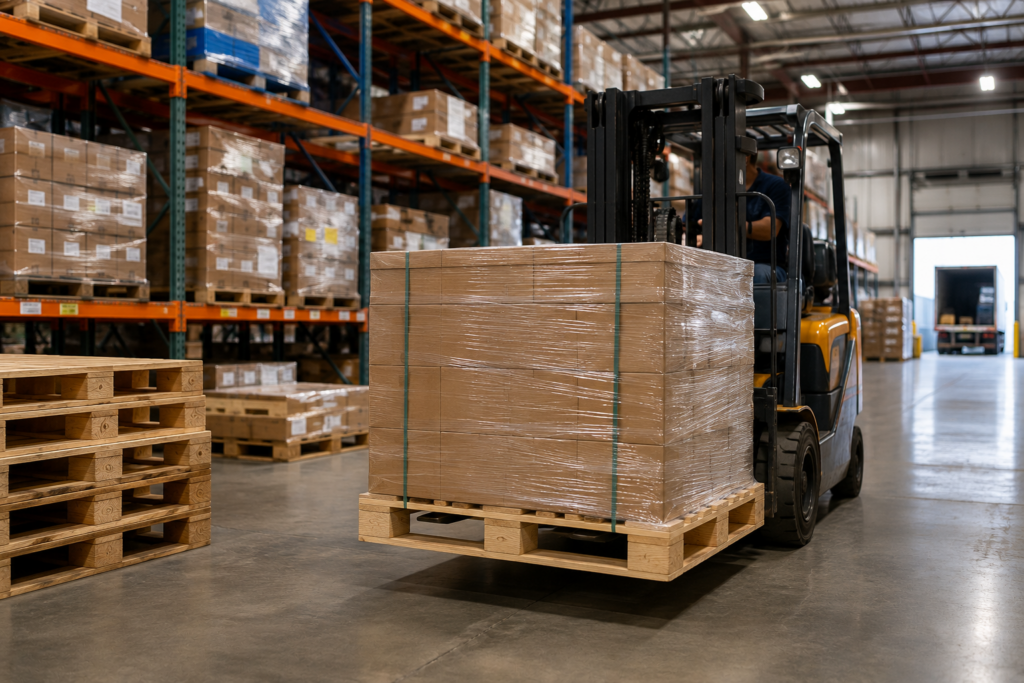
If your operation uses forklifts, pallet jacks, or automated material-handling equipment, make sure the pallet is compatible with your system. The four-way entry design of block pallets allows equipment to approach from multiple directions, making everyday handling faster and more efficient.
Evaluate Your Storage Environment
Where your pallets will be stored also plays an important role. Warehouses with pallet racking, cold storage facilities, outdoor yards, and manufacturing plants may all require different pallet specifications. Selecting the right design for your operating environment helps improve both safety and long-term performance.
Domestic or Export Shipping?
If your products are shipped internationally, you’ll typically need heat-treated block pallets that comply with ISPM 15 regulations. For businesses shipping only within Canada, the right pallet choice depends more on load requirements, handling frequency, and storage conditions than export compliance.
New, Recycled, or Custom Block Pallets?
The best option depends on your operational needs and budget.
- New block pallets are ideal when consistent dimensions and maximum durability are required.
- Recycled block pallets provide a cost-effective solution for many warehousing, distribution, and industrial applications.
- Custom block pallets are designed for products with unique sizes, weights, or handling requirements that standard pallet sizes can’t accommodate.
If you’re unsure which option is right for your operation, speaking with an experienced pallet supplier can help you choose a solution that matches your workflow rather than paying for features you don’t need.