
Stringer Pallets: Built for Reliable Material Handling
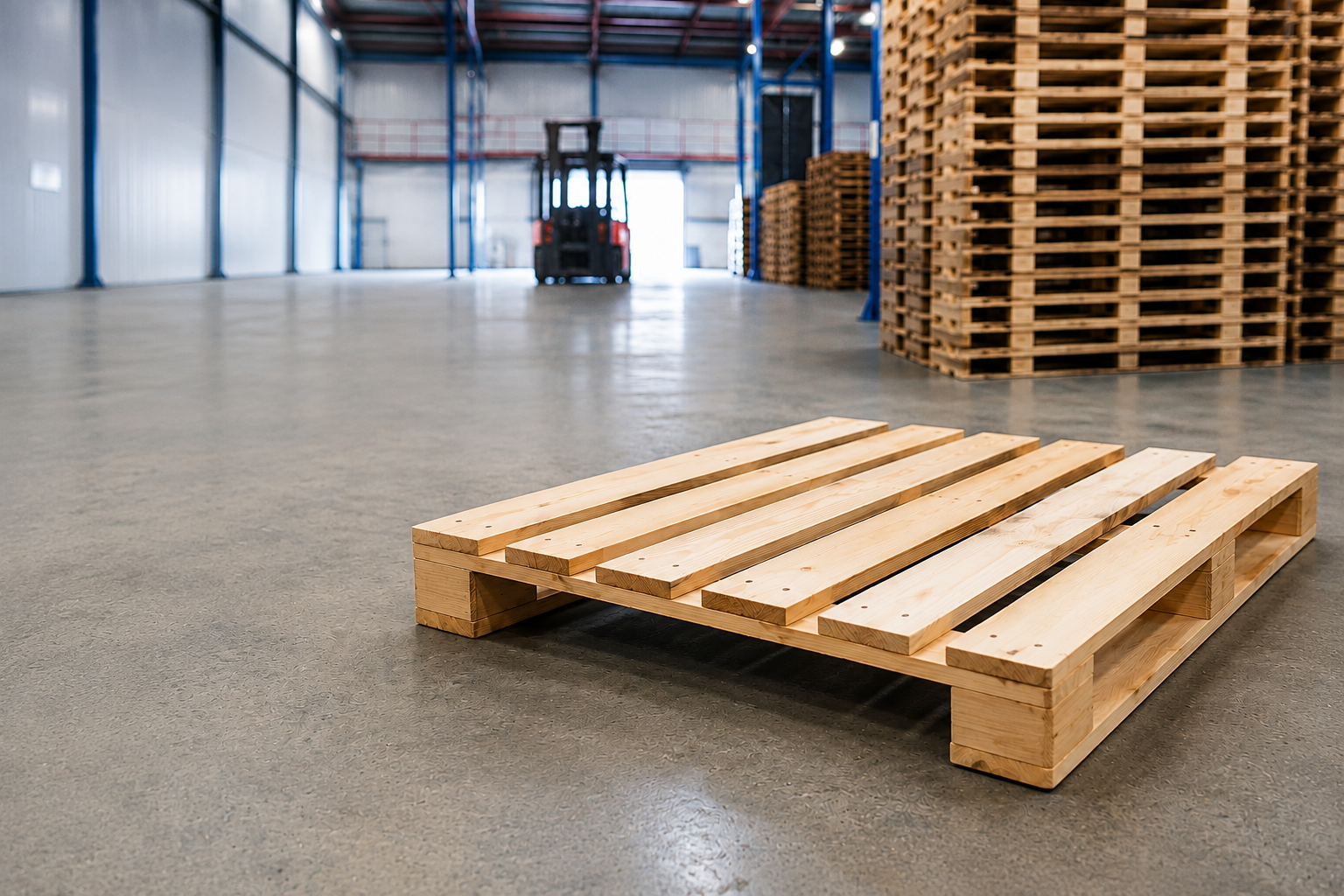
Stringer pallets are one of the most widely used wooden pallets for storing, transporting, and handling goods across warehouses, manufacturing facilities, and distribution centres. Their straightforward design, dependable strength, and cost-effectiveness make them a practical choice for many day-to-day operations.
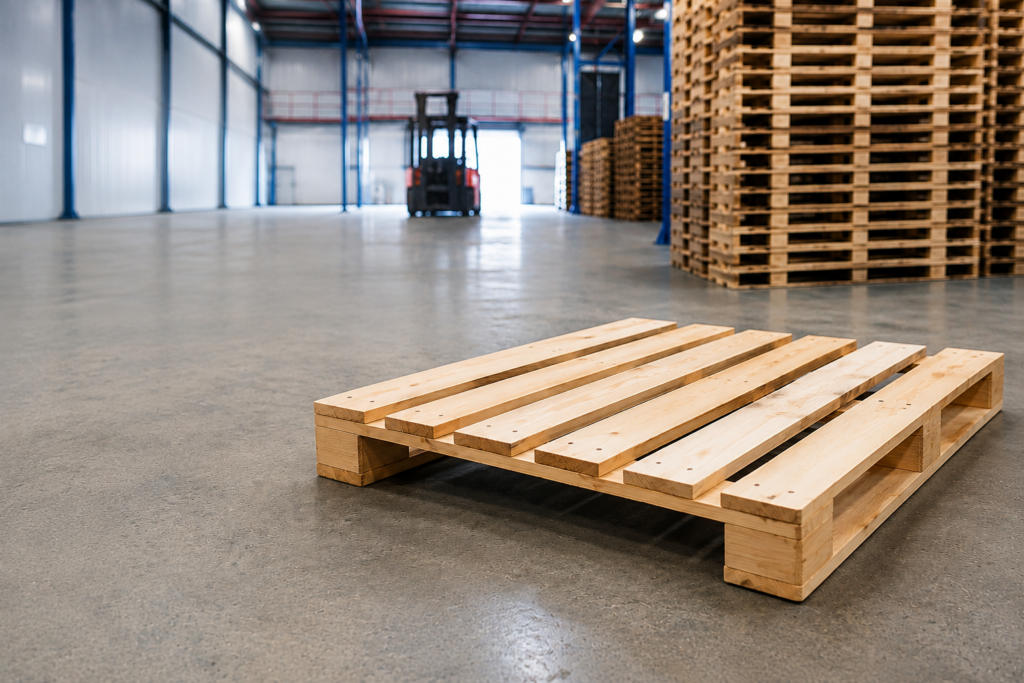
In this guide, you’ll learn how stringer pallets are built, where they’re used, how they compare with block pallets, and how to choose the right option for your business.
Understanding Stringer Pallet
A stringer pallet is a wooden pallet built with long horizontal support boards, known as stringers, that run between the top and bottom deck boards. These stringers form the structural frame of the pallet, providing the strength needed to support and move products safely throughout the supply chain.
Unlike block pallets, which use solid support blocks for four-way forklift access, stringer pallets are traditionally designed with two-way forklift entry. However, many modern stringer pallets are manufactured with notched stringers, allowing forklifts to enter from all four sides while maintaining the familiar stringer construction.
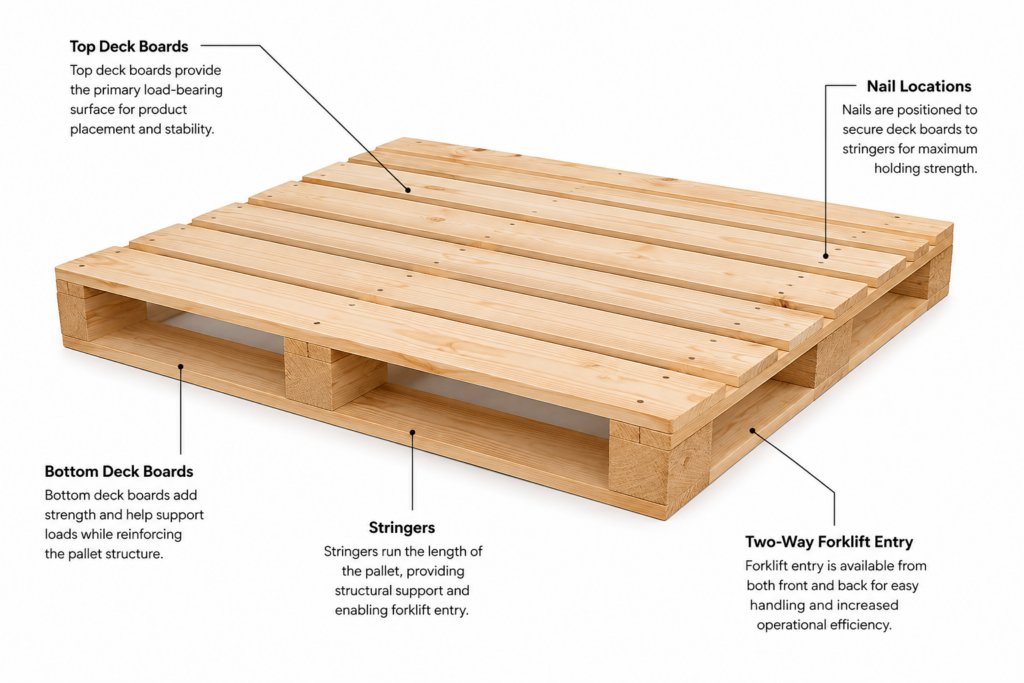
Because of their practical design and lower manufacturing cost, wooden stringer pallets are widely used for warehousing, transportation, manufacturing, retail distribution, and general shipping. They offer a reliable solution for businesses that need durable pallets for everyday material handling without the additional cost of more complex pallet designs.
2-Way vs. 4-Way Stringer Pallets: Which One Is Right for Your Business?
One of the first decisions when selecting a stringer pallet is choosing between a 2-way stringer pallet and a 4-way stringer pallet. While both are built using longitudinal wooden stringers, the way forklifts can access the pallet changes how efficiently it performs in different warehouse and shipping environments.
If your business regularly moves products with forklifts, stores inventory in racking systems, or loads freight throughout British Columbia, understanding this difference can help you choose the right pallet from the beginning.
2-Way Stringer Pallets
A 2-way stringer pallet allows forklift entry from two opposite sides. The solid wooden stringers provide excellent structural support, making this design a dependable choice for standard shipping, storage, and general warehouse operations.
Businesses often choose 2-way stringer pallets when they need a reliable pallet for everyday use and do not require frequent loading or unloading from multiple directions.
Best suited for:
- Standard warehouse storage
- General freight movement
- Manufacturing facilities
- Cost-conscious pallet purchasing
- Operations with straightforward material handling
4-Way Stringer Pallets
A 4-way stringer pallet uses notched stringers that allow forklifts to enter from all four sides. This additional access improves handling speed, reduces repositioning, and helps warehouse teams move products more efficiently in busy operations.
For businesses with higher shipping volumes or fast-moving inventory, a 4-way stringer pallet can improve workflow by making loading, unloading, and pallet positioning quicker and more convenient.
Best suited for:
- Distribution centres
- High-volume warehouses
- Third-party logistics (3PL) operations
- Frequent forklift handling
- Faster loading and unloading processes
| Feature | 2-Way Stringer Pallet | 4-Way Stringer Pallet |
|---|
| Forklift access | Two sides | Four sides |
| Material handling | Standard operations | Faster and more flexible handling |
| Warehouse efficiency | Good | Excellent |
| Typical investment | More economical | Higher due to additional manufacturing |
| Best for | Everyday storage and shipping | Busy warehouses and distribution operations |
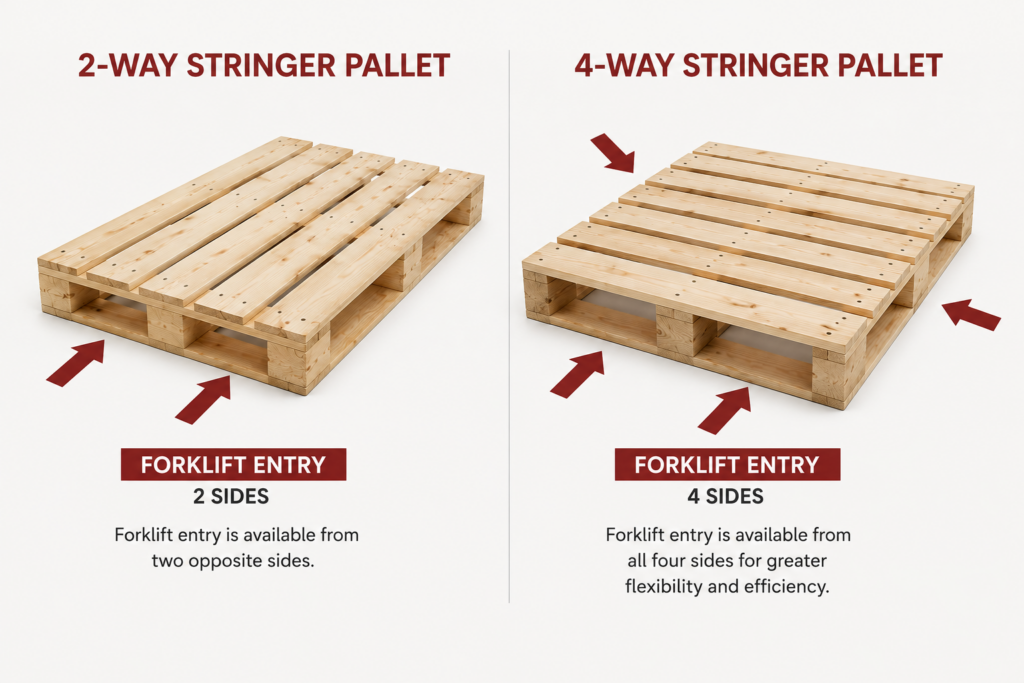
The right option depends on how your products move through your facility. For many businesses, a 2-way stringer pallet offers dependable performance at a lower cost, while companies handling larger volumes often benefit from the greater accessibility of a 4-way stringer pallet.
Why Many Businesses Continue to Choose Stringer Pallets
Not every operation needs the most expensive pallet design. For many warehouses, manufacturers, and distributors, stringer pallets provide the right combination of durability, affordability, and dependable performance for everyday material handling.
Whether you’re shipping products across British Columbia, managing warehouse inventory, or supplying retail locations, choosing the right pallet is about finding a solution that matches your operation—not simply buying the strongest pallet available.
A Practical Choice for Everyday Operations
A wood stringer pallet is built to handle routine shipping, storage, and transportation without adding unnecessary costs. Its straightforward design makes it a dependable option for businesses that move products daily and require consistent performance throughout their supply chain.
Lower Investment Without Compromising Reliability
For many companies, pallet purchasing is an ongoing operating expense. Because stringer pallets use a simpler construction than block pallets, they are often more economical to manufacture while still providing the strength required for most warehouse and distribution environments.
Easy to Repair and Return to Service
One reason wooden stringer pallets remain popular is their repairability. Damaged deck boards or individual components can often be replaced without discarding the entire pallet, helping businesses extend pallet life, reduce replacement costs, and support more sustainable pallet management.
Compatible with Standard Warehouse Equipment
Stringer pallets are designed to work with the forklifts and pallet jacks commonly used throughout warehouses and distribution centres. Whether you choose a 2-way stringer pallet or a 4-way stringer pallet, selecting the right design helps improve handling efficiency while keeping daily operations running smoothly.
Suitable for a Wide Range of Industries
Because of their versatility, stringer pallets are used across many industries, including:
- Warehousing and distribution
- Manufacturing
- Retail and wholesale
- Food and beverage
- Building materials
- Third-party logistics (3PL)
Their ability to support different products and handling requirements makes them one of the most widely used wooden pallet designs in modern supply chains.
Stringer Pallets vs. Block Pallets: Which One Should You Choose?
Both stringer pallets and block pallets are widely used across warehouses, manufacturing facilities, and distribution centres throughout British Columbia. While they perform the same basic job, their construction and handling capabilities make each one better suited to different types of operations.
The right choice depends on how your products are stored, moved, and shipped—not simply on which pallet is stronger.
Choose Stringer Pallets If…
Stringer pallets are often the better option when your business needs a dependable pallet for everyday warehouse operations while keeping purchasing costs under control.
They are a practical choice if you:
- Ship standard products on a regular basis
- Need an economical pallet for bulk purchasing
- Operate with conventional forklifts and pallet jacks
- Want pallets that are easy to repair and maintain
- Require reliable performance for general warehousing and transportation
Choose Block Pallets If…
Block pallets are designed for operations that demand greater handling flexibility and higher structural performance. Their true four-way entry allows forklifts to access the pallet from every side, making product movement quicker in busy warehouse environments.
They are often preferred if you:
- Handle heavy or high-value products
- Use automated warehouse systems or pallet racking
- Require frequent forklift movement from multiple directions
- Export products that require heat-treated pallets
- Need maximum stability for demanding industrial applications
| Feature | Stringer Pallets | Block Pallets |
|---|
| Construction | Long wooden stringers support the deck | Solid support blocks connect the deck boards |
| Forklift access | 2-way or notched 4-way | True 4-way access |
| Cost | More economical | Higher initial investment |
| Repairs | Simple and cost-effective | More complex depending on the design |
| Best suited for | General warehousing, transportation, and distribution | Heavy-duty handling, export shipping, racking, and high-volume operations |
Neither pallet design is universally better. A stringer pallet is often the most cost-effective solution for everyday operations, while a block pallet becomes the better investment when faster material handling, higher load capacity, or demanding warehouse environments require additional strength and accessibility.
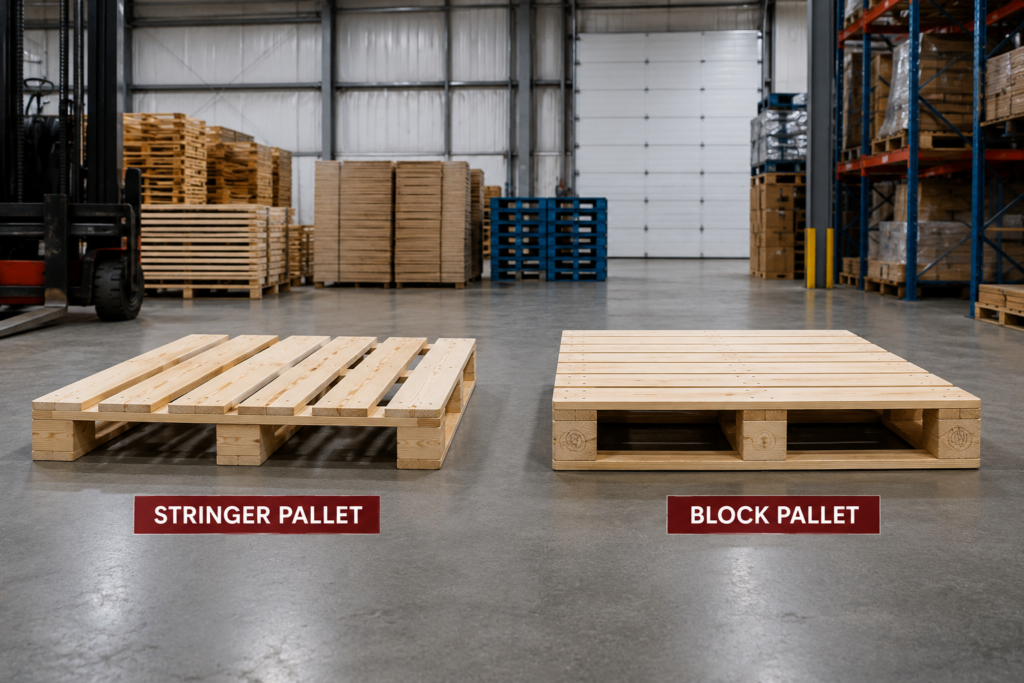
If you’re unsure which option best fits your operation, discussing your load requirements, handling equipment, and shipping needs with a pallet supplier can help you select the most suitable solution before placing a bulk order.
How to Choose the Right Stringer Pallet for Your Operation
Choosing the right stringer pallet isn’t simply about selecting a standard pallet size. The right option depends on how your products are stored, handled, and transported throughout your operation. Taking a few practical factors into account before ordering can help improve efficiency, reduce pallet damage, and avoid unnecessary costs.
Consider the Weight of Your Products
The first step is understanding the weight your pallets will carry. Lightweight consumer goods, packaged products, and retail shipments often have different pallet requirements than machinery, building materials, or industrial equipment.
Selecting a pallet that’s designed for your typical load helps improve stability during storage and transportation while reducing the risk of pallet failure.
Think About Your Material Handling Equipment
Your handling equipment plays an important role in choosing the right pallet design.
If your operation mainly uses pallet jacks or forklifts approaching from two sides, a 2-way stringer pallet may provide everything you need. However, warehouses with frequent forklift movement from multiple directions often benefit from 4-way stringer pallets, which allow faster loading and unloading with less repositioning.
Consider Your Storage System
The way pallets are stored also affects which design performs best. Ground stacking, warehouse racking, and high-volume distribution centres can place different demands on a pallet.
Choosing a stringer pallet that’s suitable for your storage environment helps maintain load stability while supporting efficient warehouse operations.
Plan for Shipping Requirements
If your products are shipped throughout British Columbia, a standard wooden stringer pallet may be the most practical solution. Businesses exporting internationally, however, should also consider whether heat-treated pallets are required to meet ISPM 15 regulations before goods leave Canada.
Work with a Supplier Who Understands Your Operation
Every business handles products differently. A pallet supplier should recommend the right pallet based on your products, handling equipment, shipping methods, and operational requirements—not simply offer the same pallet to every customer.
Looking for Quality Stringer Pallets in British Columbia?
Whether you need a few pallets or ongoing bulk supply, choosing the right pallet starts with understanding your operational requirements. At West Coast Pallet, we help businesses across British Columbia find dependable stringer pallet solutions for warehousing, manufacturing, distribution, and shipping.
If you’re unsure which pallet design is right for your operation, our team is happy to help you choose the most practical and cost-effective solution.
Frequently Asked Questions
Are stringer pallets strong enough for heavy loads?
Yes. Stringer pallets are built to handle a wide range of commercial and industrial loads. The right load capacity depends on the pallet’s dimensions, lumber quality, and intended application. For exceptionally heavy products, a custom pallet may be the better choice.
Should I choose a 2-way or a 4-way stringer pallet?
A 2-way stringer pallet is ideal for standard storage and shipping, while a 4-way stringer pallet offers easier forklift access from all sides. If your operation involves frequent loading, unloading, or high-volume material handling, a 4-way design is often the more efficient option.
Can stringer pallets be repaired and reused?
Yes. Wooden stringer pallets can often be repaired by replacing damaged boards or structural components, helping extend their service life and reduce replacement costs.
Are stringer pallets suitable for international shipping?
They can be, provided they are heat treated and comply with ISPM 15 requirements. If you’re exporting products outside Canada, using compliant pallets helps avoid customs delays and shipping issues.
Can I order custom-size stringer pallets in British Columbia?
Absolutely. If standard pallet sizes don’t fit your products or warehouse system, custom stringer pallets can be manufactured to meet your required dimensions, load capacity, and handling requirements.