
Custom Pallets: Built for Loads That Standard Pallets Can’t Handle
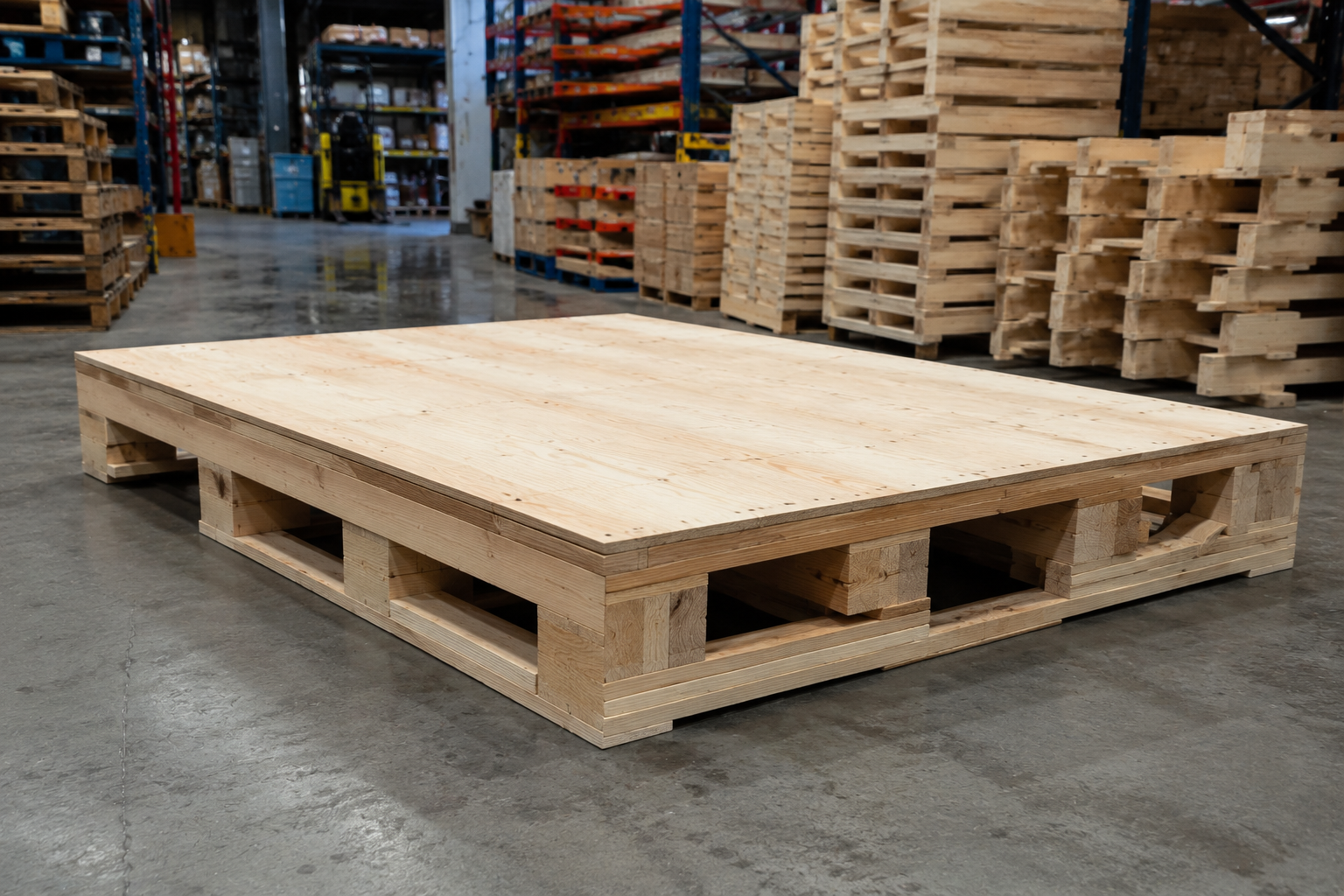
Custom pallets are built for products that simply don’t fit a standard pallet. When the wrong pallet size leads to unstable loads, wasted space, or damaged shipments, a custom-built solution can make handling and transportation much more efficient.
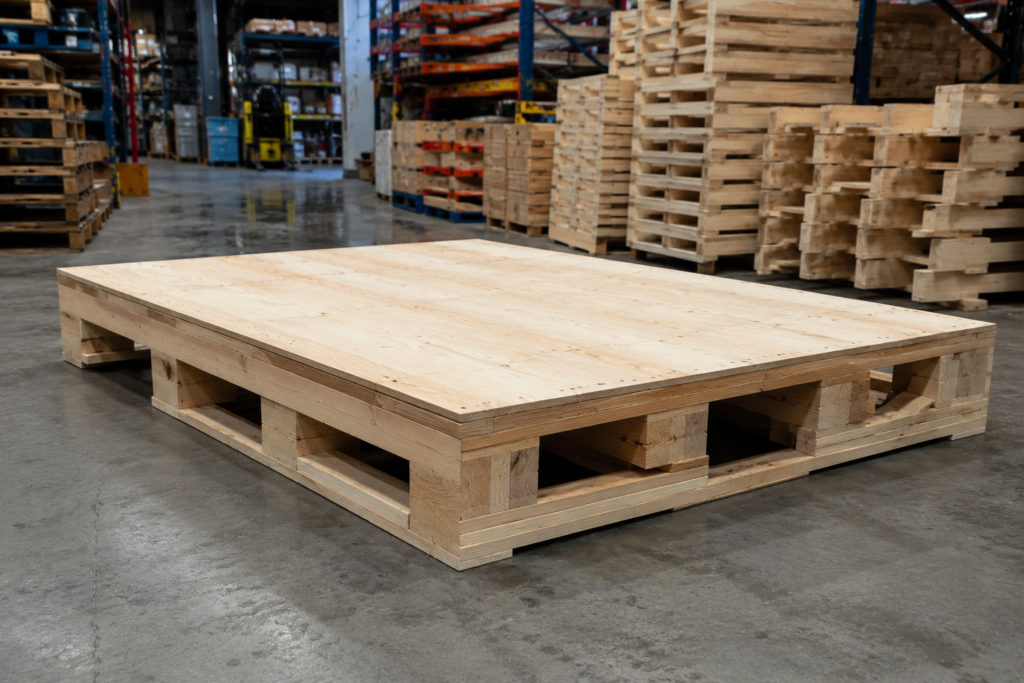
Before investing in one, it’s important to know when a custom pallet is actually necessary—and when a standard wooden pallet can do the same job for less.
How Do You Know If You Need Custom Pallets?
Not every business needs custom pallets. If your products fit securely on a standard pallet and move through your warehouse without handling issues, a standard pallet is often the most practical choice.
However, a custom pallet becomes worth considering when standard sizes start creating operational problems instead of solving them.
You may need custom pallets if:
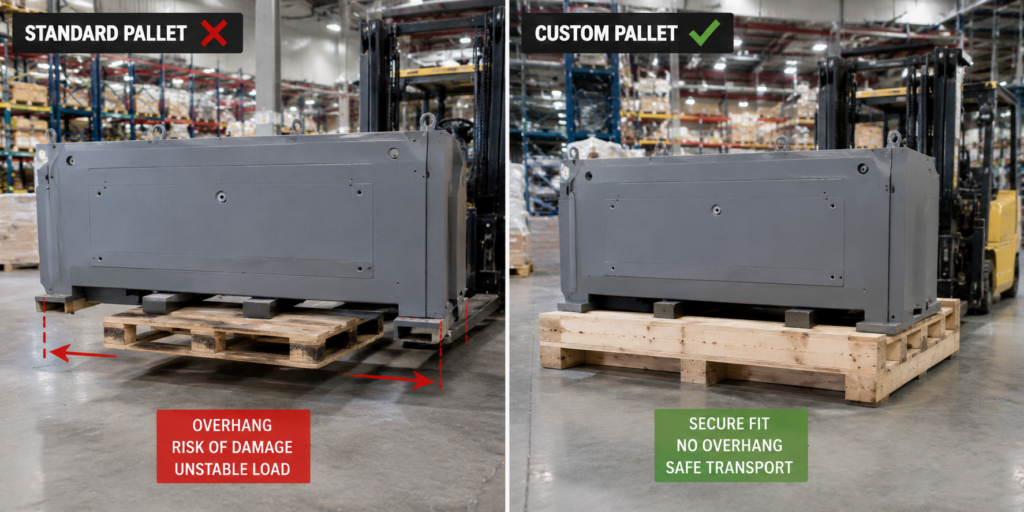
- Your products extend beyond the edges of a standard pallet.
- Your loads are unusually heavy and require additional support.
- Your products have unique shapes that make them unstable during storage or transport.
- Your warehouse uses automated equipment or racking systems with specific pallet requirements.
- You regularly export products that require a pallet built around exact dimensions or shipping specifications.
A standard pallet is usually enough if:
- Your products fit standard pallet sizes without overhang.
- Your loads remain stable during handling and transportation.
- You’re looking for the most cost-effective solution for everyday warehouse operations.
- You can safely use quality recycled wooden pallets without affecting product safety or efficiency.
Quick tip: Many businesses assume they need a custom pallet when the real issue is using the wrong standard pallet type. In many cases, switching to the correct block pallet or stringer pallet solves the problem without the added cost of a custom-built pallet.
What Can Be Customized on a Pallet?
A custom pallet isn’t simply a pallet with different dimensions. Almost every part of the design can be adjusted to match how your products are stored, handled, and shipped. The right combination improves load stability, makes handling easier, and helps reduce product damage.
Pallet Size
The length and width are usually the first things to change. Businesses shipping oversized machinery, long materials, or irregular products often require pallet dimensions that go beyond standard sizes to keep the load fully supported.
Load Capacity
Some products need a pallet that can safely carry significantly more weight than a standard design. By using stronger lumber, additional support blocks, or reinforced construction, a pallet can be built for heavier applications without compromising stability.
Entry Style
The way forklifts or pallet jacks access the pallet also matters.
- 2-way entry works well for straightforward warehouse operations.
- 4-way entry improves handling speed by allowing forklifts to lift the pallet from every side.
Choosing the right entry style depends on your equipment and workflow rather than the pallet alone.
Deck Layout
The spacing between deck boards can be adjusted depending on the product being transported. Smaller items or products with narrow bases often need a tighter deck, while heavier industrial loads may require a different board arrangement for better weight distribution.
Heat Treatment
If pallets are used for international shipping, they may need ISPM 15 heat treatment to meet export regulations. Planning this requirement during the design stage helps avoid shipping delays later.
Good to know: In many situations, businesses discover that changing the pallet configuration, not necessarily ordering a completely custom pallet—is enough to solve their handling or storage challenges.

Things to Consider Before Ordering Custom Pallets
Ordering a custom pallet is easier when you know exactly what your operation requires. Before requesting a quote, take a few minutes to confirm these details. It helps your supplier recommend the right pallet design and prevents unnecessary costs or production delays.
| Before You Order | Why It Matters |
|---|---|
| Product dimensions | The pallet should properly support your products without excessive overhang. |
| Maximum load weight | Load capacity determines the right pallet design and wood thickness. |
| Handling equipment | Let your supplier know whether you use forklifts, pallet jacks, conveyors, or automated systems. |
| Storage environment | Indoor, outdoor, or cold storage conditions can affect the recommended pallet construction. |
| Shipping destination | Export shipments may require heat-treated pallets that comply with ISPM 15 regulations. |
| Order quantity | Production methods and pricing often vary between small and high-volume orders. |
| Reuse requirements | If pallets will be used repeatedly, a stronger design can reduce replacement costs over time. |
Expert Insight: If you’re unsure about any of these specifications, provide your product dimensions and shipping requirements. An experienced pallet supplier can recommend a pallet design that fits your operation without paying for features you don’t actually need.
Industries That Benefit Most from Custom Pallets
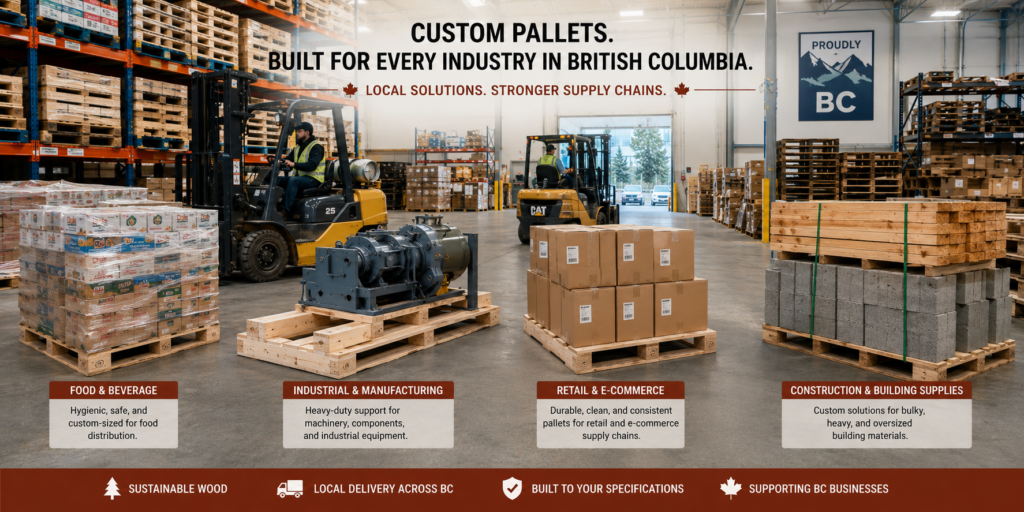
Custom pallets are used across many industries where standard pallet sizes don’t provide the right fit, strength, or handling efficiency. Choosing a pallet designed around your products can improve storage, reduce damage, and simplify transportation.
Manufacturing
Manufacturers often ship machinery parts, fabricated components, and products with unusual dimensions. Custom pallets provide stable support and make loading and unloading safer.
Food & Beverage
Businesses handling packaged food, beverages, and bulk ingredients often require pallets designed for consistent stacking, warehouse storage, and efficient transportation. Export shipments may also require heat-treated pallets.
Warehousing & Distribution
Distribution centres and third-party logistics (3PL) companies use custom pallets to improve space utilisation, streamline inventory handling, and maximise trailer capacity.
Construction & Building Materials
Heavy building products, oversized materials, and irregular loads often require stronger pallet designs that can safely support additional weight during transport.
Retail & E-commerce
Retail suppliers and fulfilment centres use custom pallets to improve product stability, reduce shipping damage, and move inventory more efficiently throughout the supply chain.
Agriculture & Industrial Products
Agricultural goods, industrial equipment, and bulk materials frequently require pallets built for specific dimensions, heavier loads, or repeated handling throughout the supply chain.
Conclusion
Choosing the right custom pallets starts with understanding your products, handling process, and shipping requirements. While many businesses can operate efficiently with standard pallet sizes, others benefit from pallets designed for specific dimensions, heavier loads, or export needs.
By evaluating factors such as pallet size, load capacity, entry style, and heat-treatment requirements, you can select a solution that improves handling, protects your products, and supports more efficient operations. If you’re unsure which pallet specification is right for your business, West Coast Pallet Ltd. can help you determine the most practical option for your application across British Columbia.