
Wooden Pallets for Safer Shipping, Storage & Material Handling
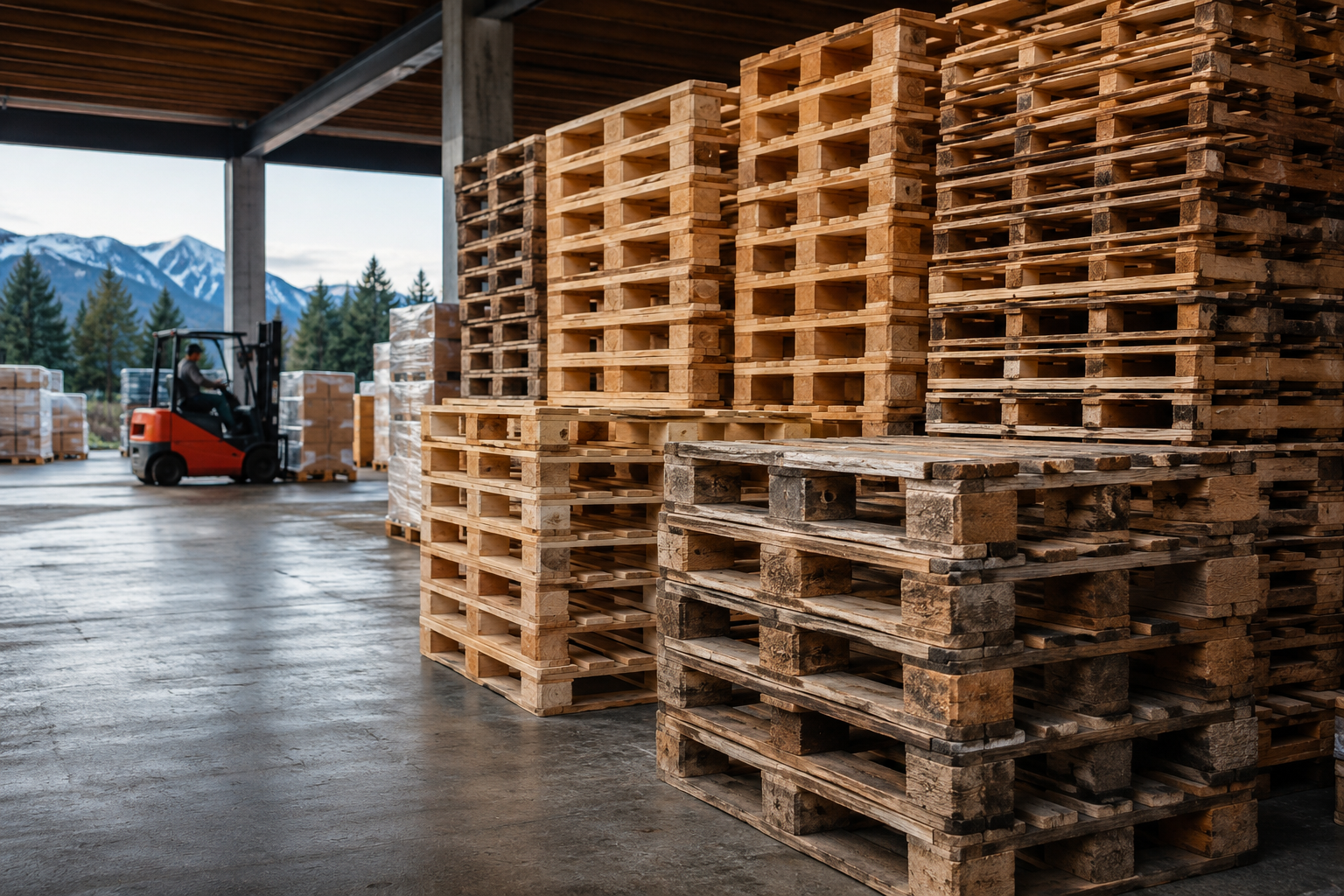
Selecting high-spec wooden pallets directly impacts inventory integrity, warehouse throughput, and cross-border transport compliance across commercial supply chains. From industrial manufacturing facilities to regional distribution centers, choosing the right wooden pallet configuration minimizes operational downtime while controlling freight expenses.
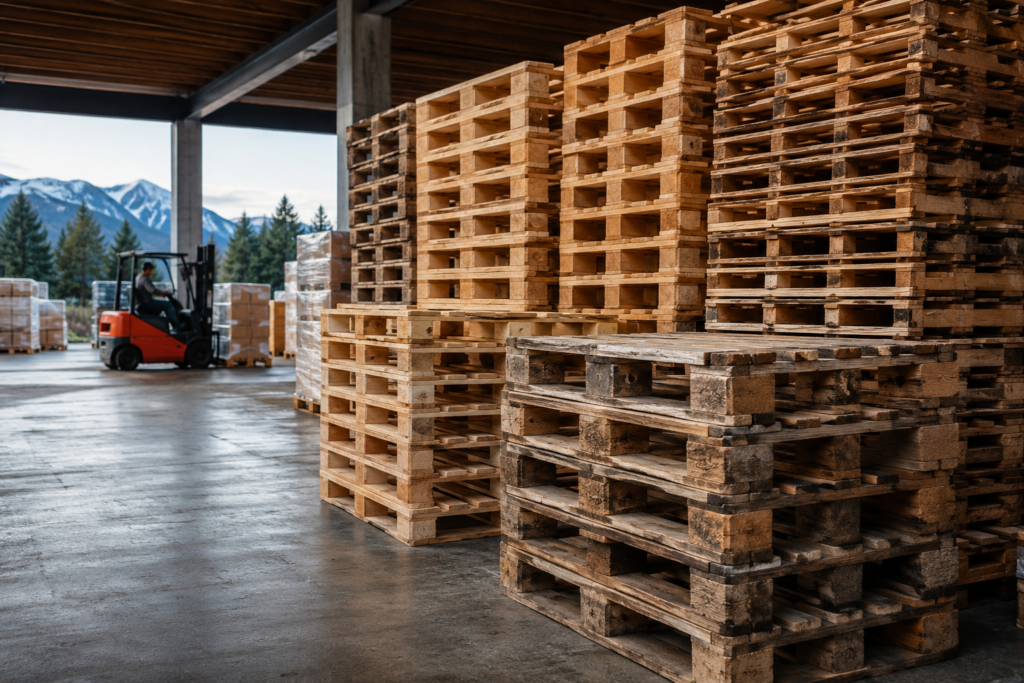
This authoritative guide outlines standard specifications, design structures, load capacities, and regulatory standards to help procurement teams choose optimal wood pallets for their material handling workflows.
Why Businesses Still Choose Wood Pallets Every Day
Despite the availability of plastic, metal, and composite alternatives, wood pallets remain the first choice for manufacturers, warehouses, distributors, and exporters. They offer the right balance of strength, availability, repairability, and cost, making them suitable for everyday material handling across almost every industry.
Key Takeaway
Businesses continue choosing wooden pallets because they are:
- Easy to repair and reuse.
- Available in a wide range of wooden pallet sizes and designs.
- Suitable for warehousing, shipping, and export operations.
- Compatible with forklifts, pallet jacks, and warehouse racking systems.
Instead of forcing a single build across every application, operations can select the specific platform design that fits their inventory:
- Retail & Warehousing: Lightweight Stringer pallets offer cost-effective, dependable support for high-volume goods.
- Heavy Manufacturing: Industrial Block pallets provide extra load capacity and true four-way forklift access for tight turning radii.
- Overseas Freight: Certified Heat-treated pallets ensure full compliance with cross-border shipping regulations.
This operational flexibility is why timber platforms continue to power supply chains across British Columbia, from Metro Vancouver distribution hubs to regional manufacturing plants.
Expert Insight: The most cost-effective platform isn’t always the cheapest unit price, it’s the build that prevents product damage, fits your facility’s machinery, and cuts long-term replacement cycles.
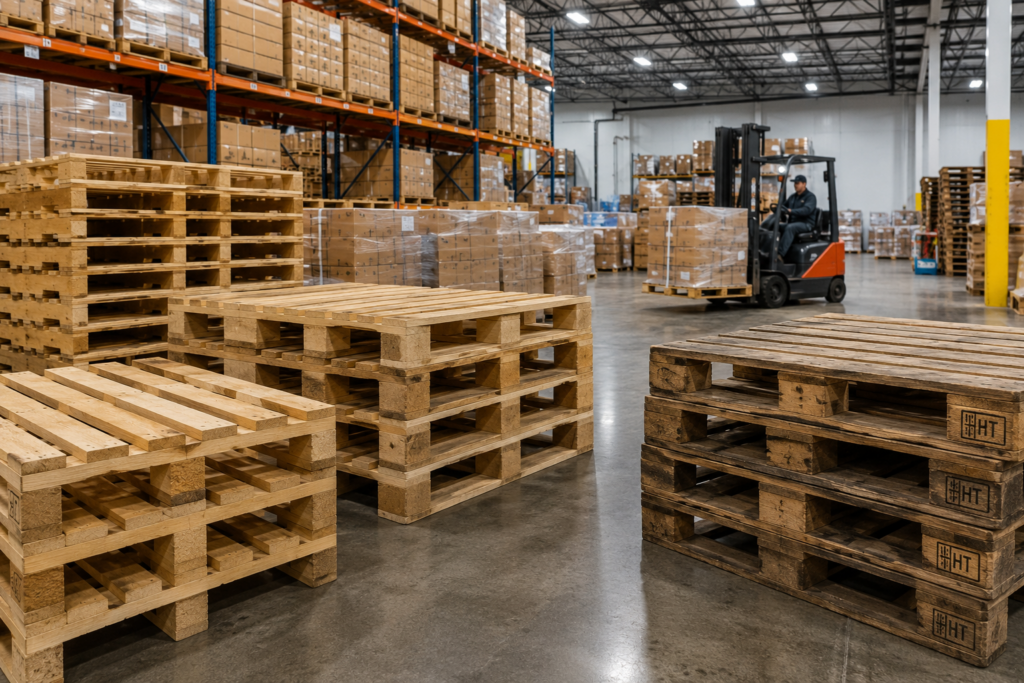
What Actually Determines the Performance of a Wooden Pallet?
Two pallets can look almost identical from a distance but perform very differently once they are loaded, stored, or transported.
The strength and suitability of a wooden pallet depend on several factors, including its design, dimensions, entry points, and intended use.
The Main Factors That Matter
| Factor | Why It Matters |
|---|---|
| Pallet Design | Determines how the pallet handles weight, forklift access, and daily use. |
| Wooden Pallet Size | The right dimensions help distribute weight properly and prevent product overhang. |
| Load Capacity | Influences how much weight the pallet can safely support. |
| Entry Type | Affects how forklifts and pallet jacks access the pallet. |
| Storage Method | Floor stacking and warehouse racking place different demands on a pallet. |
| Shipping Requirements | Export shipments may require heat-treated pallets and ISPM 15 compliance. |
A pallet that works perfectly in a warehouse may not be the right choice for export shipping. Likewise, a pallet designed for heavy industrial equipment may be unnecessary for lighter retail products.
Key Takeaway
Before choosing a pallet type, businesses should evaluate:
- Product weight
- Product dimensions
- Storage method
- Handling equipment
- Shipping destination
These five factors usually determine the most suitable pallet specification.
The Most Common Types of Wooden Pallets
Not all wood pallets are built the same. Different designs are created to solve different handling and storage challenges.
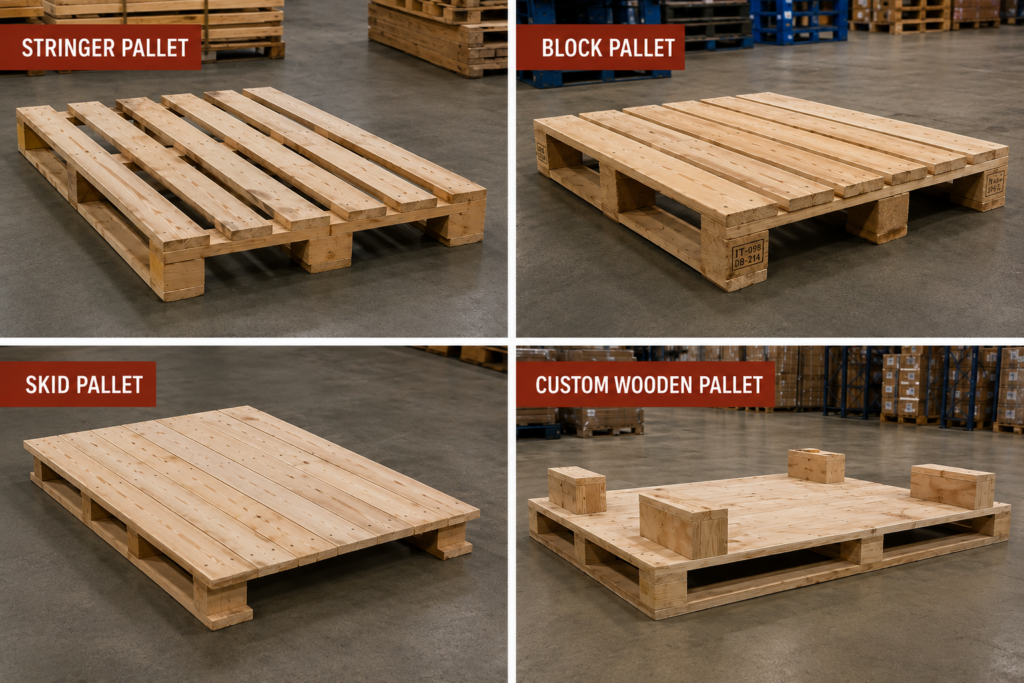
The most common pallet types used across warehouses, manufacturing facilities, and distribution centres include:
Stringer Pallets
Built using parallel stringers that support the deck boards.
Best suited for:
- General warehousing
- Distribution centres
- Everyday shipping applications
Block Pallets
Built using solid support blocks instead of stringers, providing stronger support and true four-way forklift access.
Best suited for:
- Heavy loads
- Automated facilities
- High-volume material handling
Skid Pallets
A simpler platform design that uses runners instead of a full bottom deck.
Best suited for:
- Machinery transport
- Industrial equipment
- Long-term load support
Custom Pallets
Designed around specific product dimensions, load requirements, or handling systems.
Best suited for:
- Non-standard products
- Specialized industries
- Unique storage requirements
Expert Insight: Many pallet failures occur because businesses choose the wrong pallet design rather than a poorly built pallet. Matching the pallet structure to the application is often more important than simply selecting the lowest-cost option.
Choosing the Right Wooden Pallet Size for Your Products
Selecting the correct wooden pallet size is just as important as choosing the right pallet design. A pallet that is too small can leave products unsupported, while an oversized pallet may waste warehouse space, increase shipping costs, and reduce handling efficiency.
Rather than looking for one “best” size, businesses should choose a pallet that matches their product dimensions, storage system, and transportation requirements.
Quick Reference: Common Wooden Pallet Dimensions
| Pallet Size | Common Applications |
|---|---|
| 48″ × 40″ | General warehousing, retail distribution and shipping. Often recognised as the standard pallet size in North America. |
| 42″ × 42″ | Beverage and food manufacturing. |
| 48″ × 48″ | Drums, bulk containers and industrial products. |
| 40″ × 40″ | Export shipments and compact storage applications. |
| Custom Sizes | Products with unique dimensions or specialised handling requirements. |
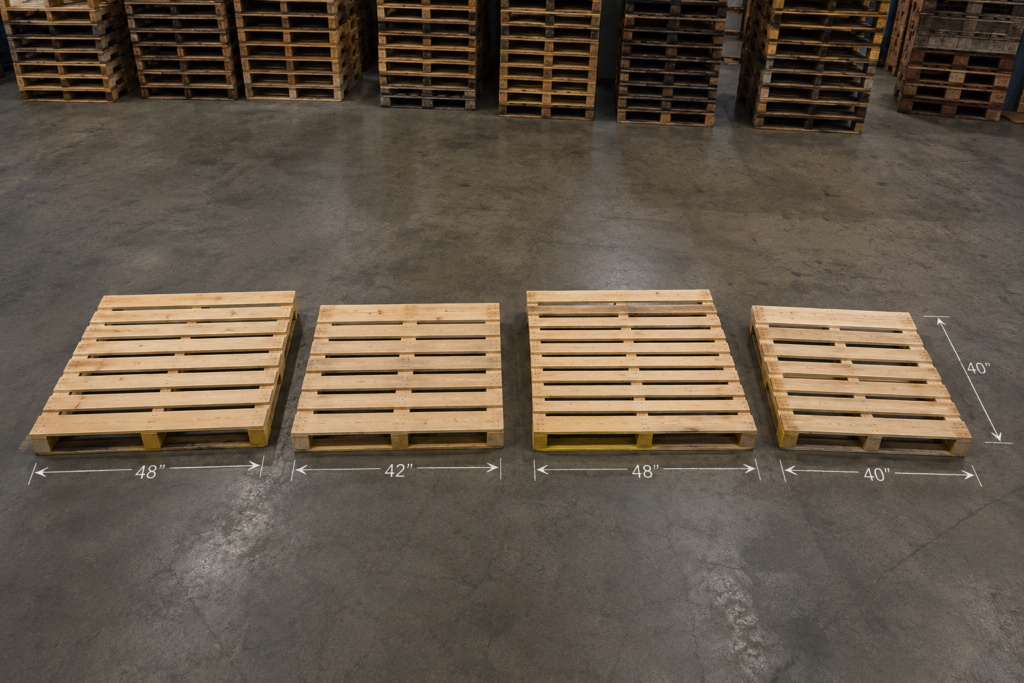
Key Takeaway: If you’re wondering “what is the standard wooden pallet size?”, the most widely used size in Canada and North America is 48″ × 40″, but it isn’t the right choice for every product. The best pallet size is the one that supports the load safely while fitting your storage and transport system.
Why Pallet Dimensions Matter More Than Most Businesses Think
The right wooden pallet dimensions do more than support the product. They influence how efficiently goods move through the entire supply chain.
Choosing the correct dimensions helps:
- Improve load distribution across the pallet.
- Reduce product overhang and handling damage.
- Maximise warehouse storage space.
- Improve compatibility with forklifts, pallet jacks and racking systems.
- Reduce wasted space during transport.
A properly sized pallet also improves operational efficiency by making loading, unloading and stacking more predictable across different facilities.
Expert Insight: Many businesses focus on the cost of the pallet itself, but incorrect pallet dimensions often create much higher costs through damaged products, unstable loads and inefficient use of warehouse space. Selecting the right size at the beginning is usually more economical than replacing damaged goods later.
Before You Buy Wooden Pallets, Ask These Five Questions
Ordering wooden pallets isn’t just about finding a supplier. The right pallet depends on what you’re moving, how it’s handled, and where it’s going. Answering a few practical questions beforehand can help you choose a pallet that performs reliably from day one.
Buying Checklist
1. How much weight will the pallet carry?
The weight of your products influences the pallet’s construction, board thickness, and overall load capacity. A pallet designed for packaged goods may not be suitable for machinery or building materials.
2. Will the pallets stay in storage or travel frequently?
Pallets used repeatedly for transportation often require stronger construction than those used mainly for warehouse storage.
3. Is the shipment staying in Canada or being exported?
If your goods are shipped internationally, you may need heat-treated pallets that comply with ISPM 15 regulations.
4. Would recycled or new pallets be a better fit?
Many businesses choose recycled wooden pallets for everyday operations because they offer dependable performance while reducing costs. Others prefer new pallets when uniform appearance or specific specifications are required.
5. Do standard pallet sizes meet your requirements?
If your products extend beyond standard dimensions or require additional support, a different pallet specification may provide a safer and more efficient solution.
Where Are Wooden Pallets Used?
One reason wood pallets remain so widely used is their versatility. The same basic platform can support different industries when matched with the right size, design, and construction.
You’ll commonly find wooden pallets in:
- Warehousing and distribution for inventory storage and order fulfilment.
- Manufacturing facilities handling raw materials and finished products.
- Retail and wholesale supply chains moving packaged goods between locations.
- Food and beverage operations, where suitable pallet specifications are required for storage and transport.
- Export and logistics, where heat-treated pallets help meet international shipping requirements.
- Construction and industrial sites transporting heavy materials and equipment.
Different industries have different handling needs, which is why pallet selection should always be based on the application rather than choosing a one-size-fits-all solution.
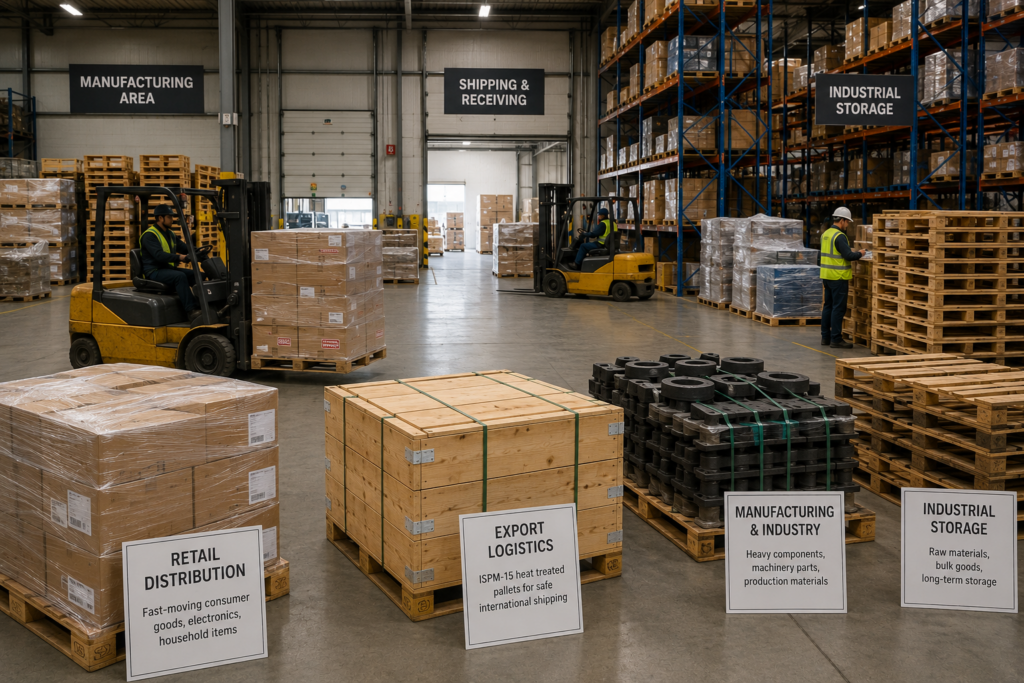
Key Takeaway: There isn’t a single wooden pallet that works best for every business. The right choice depends on your products, handling equipment, storage conditions, and shipping requirements, not simply on price or popularity.
Common Mistakes When Choosing Wooden Pallets
Choosing the right wooden pallets isn’t only about dimensions or price. Small specification mistakes can lead to damaged products, inefficient handling, and higher replacement costs over time.
Mistakes to Avoid
- Choosing the wrong pallet size for your products, leading to load overhang and instability.
- Ignoring load capacity, especially when handling heavy or unevenly distributed goods.
- Ordering pallets without considering forklift or pallet jack access.
- Using standard pallets when the application requires a different specification.
- Forgetting heat treatment for international shipments where ISPM 15 compliance is required.
Expert Insight: The most cost-effective pallet is the one that performs reliably throughout its service life. A pallet that reduces product damage and improves handling efficiency often delivers better long-term value than simply choosing the lowest purchase price.
Key Points to Remember
If you’re selecting wooden pallets for your business, keep these fundamentals in mind:
- Match the pallet size to your product dimensions.
- Consider both load capacity and handling equipment.
- Choose the appropriate pallet design for your operation.
- Confirm whether heat-treated pallets are required for export shipments.
- Work with a supplier that understands your storage, transport, and operational requirements.
A little planning before ordering can help improve warehouse efficiency, reduce product damage, and extend pallet service life.
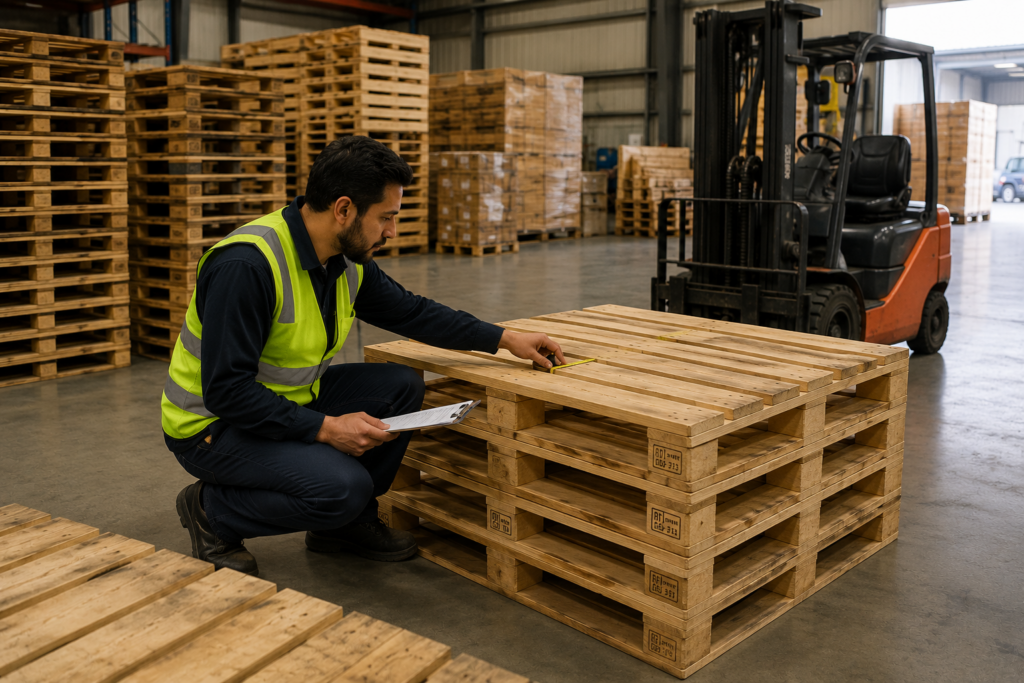
Conclusion
Choosing the right wooden pallets is about more than selecting a standard size. The right pallet should match your products, handling equipment, storage conditions, and shipping requirements to improve efficiency and reduce long-term operating costs.
Whether you need recycled wooden pallets, heat-treated pallets for export, or a reliable pallet solution for everyday warehouse operations, understanding the key differences helps you make a more informed purchasing decision.
Looking for high-quality wooden pallets in British Columbia? Contact West Coast Pallet today to discuss your requirements and get reliable pallet solutions for your business.